Why people believe weird things by Michael Shermer reads as analytical, skeptical. These 12 books share its genome — matched by how they actually read, not just their shelf label.
What Why people believe weird things is like to read
A skeptical investigator walks through why smart people believe strange things, mixing case studies of psychics, cults, and denialism with an analytical, myth-busting tone. Best for: readers curious about skepticism, critical thinking, and the psychology behind pseudoscience and conspiracy belief.
The Demon-Haunted World
Carl Sagan · 1995
A patient, passionate defense of scientific skepticism that reads like a wise mentor talking you through the seductions of pseudoscience.
complete story
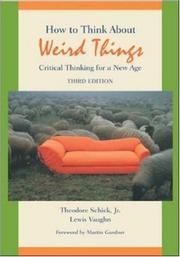
How to think about weird things
Theodore Schick · 1994
A textbook-style guide that walks readers through logical fallacies and evaluation criteria for extraordinary claims, aiming to build durable critical-thinking habits.
complete storydeep cut
Why I am not a Christian
Bertrand Russell · 1927
A brisk, argumentative lecture-turned-pamphlet in which Russell dismantles theistic arguments and Christian moral claims with cool logic and pointed wit.
complete storydeep cut
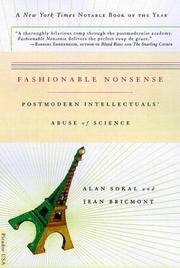
Fashionable nonsense
Alan D. Sokal · 1998
Another road into pseudoscience and critical thinking, taken at steady pacing.
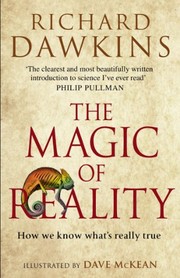
The Magic of Reality
Richard Dawkins · 2001
A guided tour through humanity's myths and the real scientific answers behind them, designed to spark awe at the true nature of reality in young and curious minds.
deep cut
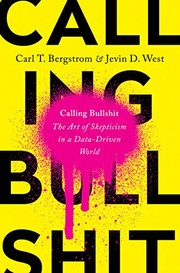
Calling Bullshit
Carl T. Bergstrom · 2020
A practical, example-driven guide that walks readers through common statistical and rhetorical tricks used to mislead, written in an engaging, accessible register.
complete storydeep cut
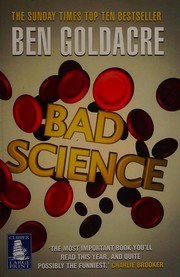
Bad Science
Ben Goldacre · 2008
A brisk, acid-tongued tour through media pseudoscience, stringing case studies (Detox Barbie, cosmetics ads, cereal-box charts) into a debunker's manifesto that is as funny as it is furious.
complete storydeep cut
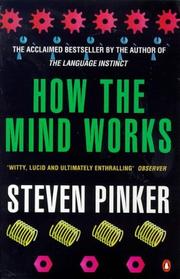
How the Mind Works
Steven Pinker · 1997
An erudite, wide-ranging tour of the mind's architecture that treats cognition as computation shaped by evolution — dense but lucid, rewarding sustained attention across chapters o
complete storydeep cut
Mein Weltbild
Albert Einstein · 1934
A patchwork of essays, letters, and speeches in which Einstein thinks aloud about pacifism, Judaism, and the meaning of a decent life — plainspoken, earnest, and quietly idealistic rather than systematic.
complete storydeep cut
The moral animal
Wright, Robert · 1994
A close nonfiction relative — matched on how it reads, with steady pacing.
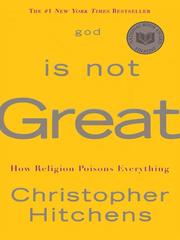
God Is Not Great
Christopher Hitchens · 2007
A pugnacious, erudite polemic that marshals close readings of scripture and scientific wonder into a sustained assault on organized religion — argumentative, quotable, and unapologetically combative.
complete storydeep cut
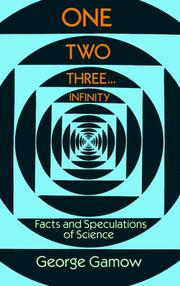
One, two, three ... infinity
George Gamow · 1947
Reading feels like an enthusiastic private tutorial from a scientist eager to share the wonders of physics and math, moving briskly between playful thought experiments and rigorous explanation.
complete storydeep cut
About Why people believe weird things — what the genome says
Is Why people believe weird things a complete story or a cliffhanger?
It's a complete, standalone-satisfying story.
Who is Why people believe weird things for?
readers curious about skepticism, critical thinking, and the psychology behind pseudoscience and conspiracy belief
Find your next read by its genome
Tell Novelome one book you love — get recommendations tuned to your taste, including the ones other sites never surface.