The bell curve by Richard J. Herrnstein reads as academic, provocative. These 12 books share its genome — matched by how they actually read, not just their shelf label.
What The bell curve is like to read
A dense, data-heavy sociological argument presented with an authoritative, academic tone, aiming to persuade through statistics and policy analysis rather than narrative. Best for: readers interested in policy debates around IQ, class, and social science willing to engage with a controversial, data-driven argument.
The Blank Slate
Steven Pinker · 2002
A rigorous, data-driven dismantling of the blank-slate hypothesis that reshapes understanding of human nature, morality, and equality by integrating evolutionary psychology, neuros
deep cut
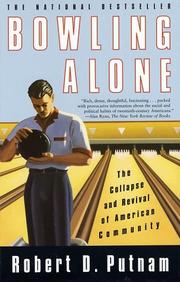
Bowling Alone
Robert D. Putnam · 2000
A close nonfiction relative — matched on how it reads, with unhurried, immersive pacing.
Iceman Inheritance
Michael Bradley · 1991
Reads provocative in the same way — and goes just as deep on intelligence.
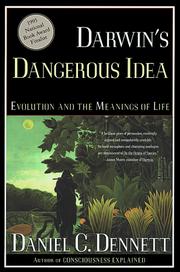
Darwin's dangerous idea
Daniel C. Dennett · 1995
A dense, wide-ranging philosophical argument that rewards patient engagement, weaving biology, philosophy, and culture into a sustained polemic on natural selection's implications.
complete storydeep cut
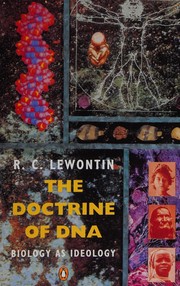
The doctrine of DNA
Richard C. Lewontin · 1991
A close nonfiction relative — matched on how it reads, with steady pacing.
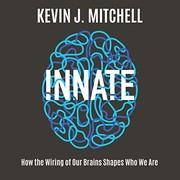
Innate
Kevin J. Mitchell · 2018
Another road into genetics, taken at steady pacing.
Cognitive psychology and its implications
John Robert Anderson · 1980
A close nonfiction relative — matched on how it reads, with steady pacing.