Pragmatics of human communication by Paul Watzlawick reads as analytical, academic. These 12 books share its genome — matched by how they actually read, not just their shelf label.
What Pragmatics of human communication is like to read
A dense but accessible academic text that builds a systematic theory of communication axioms through case studies and literary examples, feeling more like a structured argument than a narrative. Best for: readers interested in psychology, therapy theory, or communication studies wanting a foundational academic text with real-world examples.
Games People Play
Eric Berne · 1964
A taxonomy of the covert scripts people run on each other at dinner tables, in marriages, and at work — presented as a catalogue of named 'games' with a clinician's dry, faintly acid wit.
complete story
The Structure of Scientific Revolutions
Thomas S. Kuhn · 1955
A compact, argument-driven treatise that reframes how science actually changes — dense with historical example and closely reasoned prose.
complete storydeep cut
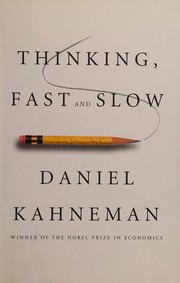
Thinking, Fast and Slow
Daniel Kahneman · 2011
A lucid, example-rich tour through the two systems of the mind that reframes how you understand your own judgment — dense with studies but conversational, best absorbed in delibera
complete story
Steps to an ecology of mind
Gregory Bateson · 1972
Another road into systems theory, taken at quick, propulsive pacing.
The power tactics of Jesus Christ, and other essays
Jay Haley · 1969
Matches the analytical, academic mood, carried on steady pacing.
Autopoiesis and cognition
Humberto R. Maturana · 1899
A close nonfiction relative — matched on how it reads, with quick, propulsive pacing.
The Fall of Public Man
Richard Sennett · 1977
A dense, argument-driven work of social theory tracing the erosion of public life and civic sociability under modern individualism; reading it feels like following a sustained, clo
complete storydeep cut
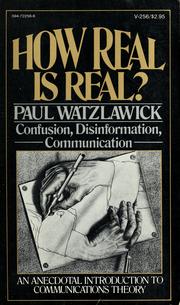
How real is real?
Paul Watzlawick · 1976
A dense, idea-driven nonfiction work that challenges readers to question the constructed nature of perceived reality through communication theory.
complete storydeep cut
Outsiders
Howard Saul Becker · 1963
A foundational sociological argument delivered in clear analytical prose, tracing how deviance is a social label rather than an inherent trait; more thesis-driven than narrative, sustained by case examples and reflection.
complete storydeep cut
The web of life
Fritjof Capra · 1996
A synthesizing tour through systems theory and ecology arguing that life's interconnectedness demands a new, sustainable worldview.
deep cut
The saturated self
Gergen, Kenneth J. · 1991
Matches the academic mood, carried on quick, propulsive pacing.
Interaction ritual
Erving Goffman · 1967
A close nonfiction relative — matched on how it reads, with steady pacing.
About Pragmatics of human communication — what the genome says
Is Pragmatics of human communication a complete story or a cliffhanger?
It's a complete, standalone-satisfying story.
Who is Pragmatics of human communication for?
readers interested in psychology, therapy theory, or communication studies wanting a foundational academic text with real-world examples
Find your next read by its genome
Tell Novelome one book you love — get recommendations tuned to your taste, including the ones other sites never surface.